Sugar Bloom: What Happens When Chocolate Changes Color?
August 20, 2025
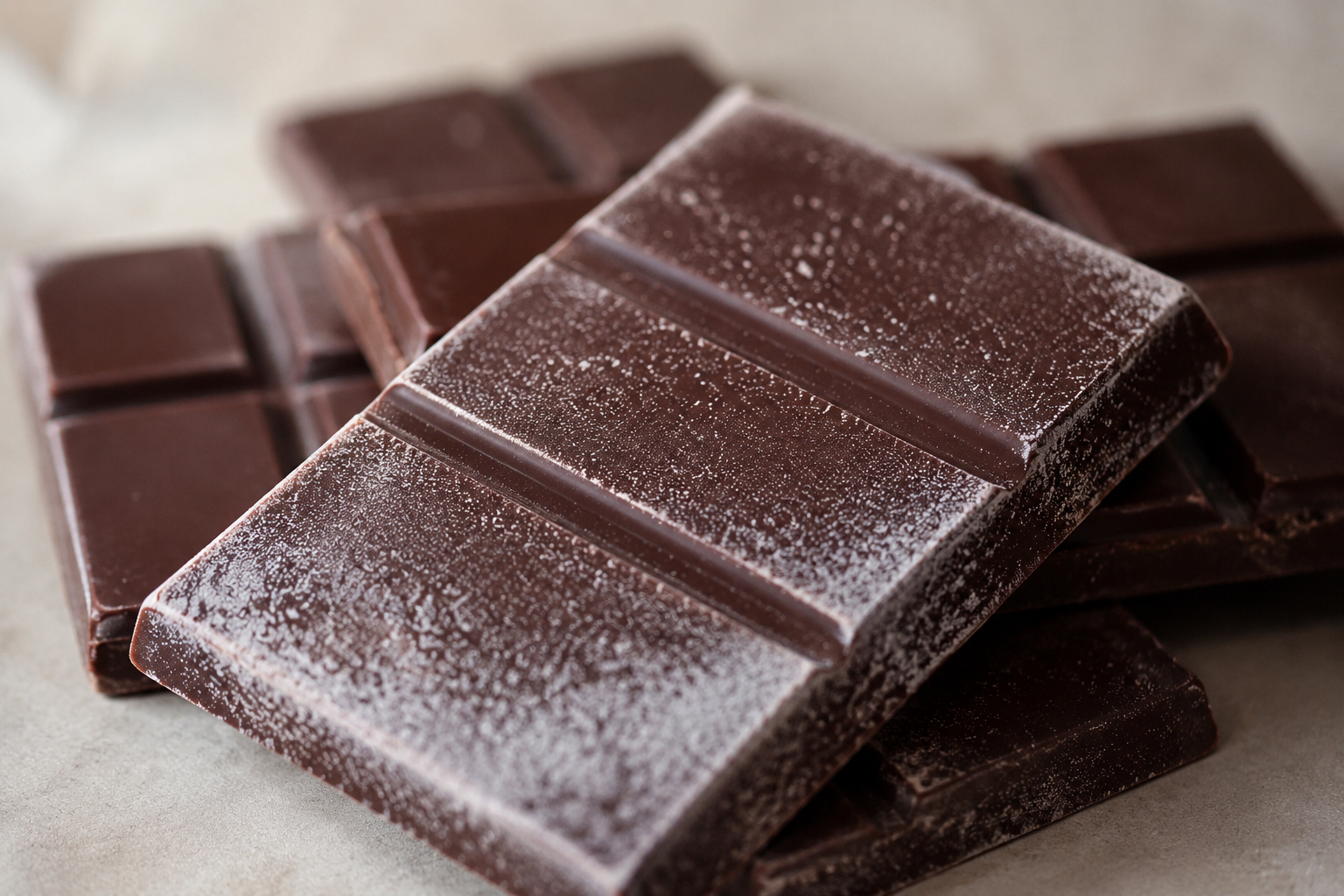
Have you ever noticed a white, dull-looking layer or a slightly grainy texture appearing on chocolate?
Many people immediately wonder: “Is it mold?” or “Has the chocolate gone bad?”
Not necessarily.
This phenomenon is known as sugar bloom — a common occurrence in chocolate that is closely related to moisture and temperature changes.
What is Sugar Bloom?
Sugar bloom occurs when chocolate is exposed to humidity, moisture, or condensation.
When moisture comes into contact with the chocolate’s surface, some of the sugar dissolves. As the moisture evaporates, the sugar recrystallizes on the surface, leaving behind a whitish appearance, dull finish, or slightly rough texture.
Unlike smooth, glossy chocolate, sugar bloom often appears dry, powdery, or grainy to the touch.
Why Does Sugar Bloom Happen?
One of the most common causes of sugar bloom is rapid temperature change.
For example, chocolate stored in the refrigerator and then immediately exposed to a warm room can develop condensation — much like water droplets forming on a cold glass. This moisture triggers the sugar bloom process.
Sugar bloom can also occur due to:
- High humidity environments
- Exposure to moisture or water vapor
- Temperature fluctuations during storage or transportation
- Improper refrigeration conditions
In tropical climates, maintaining chocolate quality can be especially challenging because humidity plays a significant role in how chocolate behaves.
Is Sugar Bloom Harmful?
The good news: no.
Sugar bloom is not mold and, in most cases, the chocolate remains safe to eat.
However, it can affect the chocolate’s visual appearance and eating experience. The texture may become slightly rougher, less smooth, or lose the premium finish typically associated with well-tempered chocolate.
In other words, sugar bloom mainly affects appearance and texture — not food safety.
Sugar Bloom vs Fat Bloom: What’s the Difference?
In the chocolate world, there are two common types of “bloom”: sugar bloom and fat bloom.
Sugar bloom is caused by moisture and usually creates a rough, grainy texture.
Fat bloom, on the other hand, occurs when cocoa butter migrates to the surface due to heat exposure, unstable tempering, or temperature fluctuations. It often appears as a smoother white or grayish coating.
Although they can look similar, their causes are completely different.
How to Keep Chocolate at Its Best
Chocolate prefers an environment that is cool, dry, and stable.
To help prevent sugar bloom:
- Store chocolate in a cool, dry place
- Avoid sudden temperature changes
- If refrigeration is necessary, keep chocolate in an airtight container
- Allow chocolate to gradually return to room temperature before opening or consuming
Because chocolate quality is not only determined during production — it is also influenced by how chocolate is stored and cared for afterward.
At Junglegold, understanding chocolate means appreciating every detail behind it — including fascinating phenomena like sugar bloom that reveal the delicate science of chocolate making.
Because chocolate is not only about flavor.
It is also about process, craftsmanship, and the experience behind every bite.